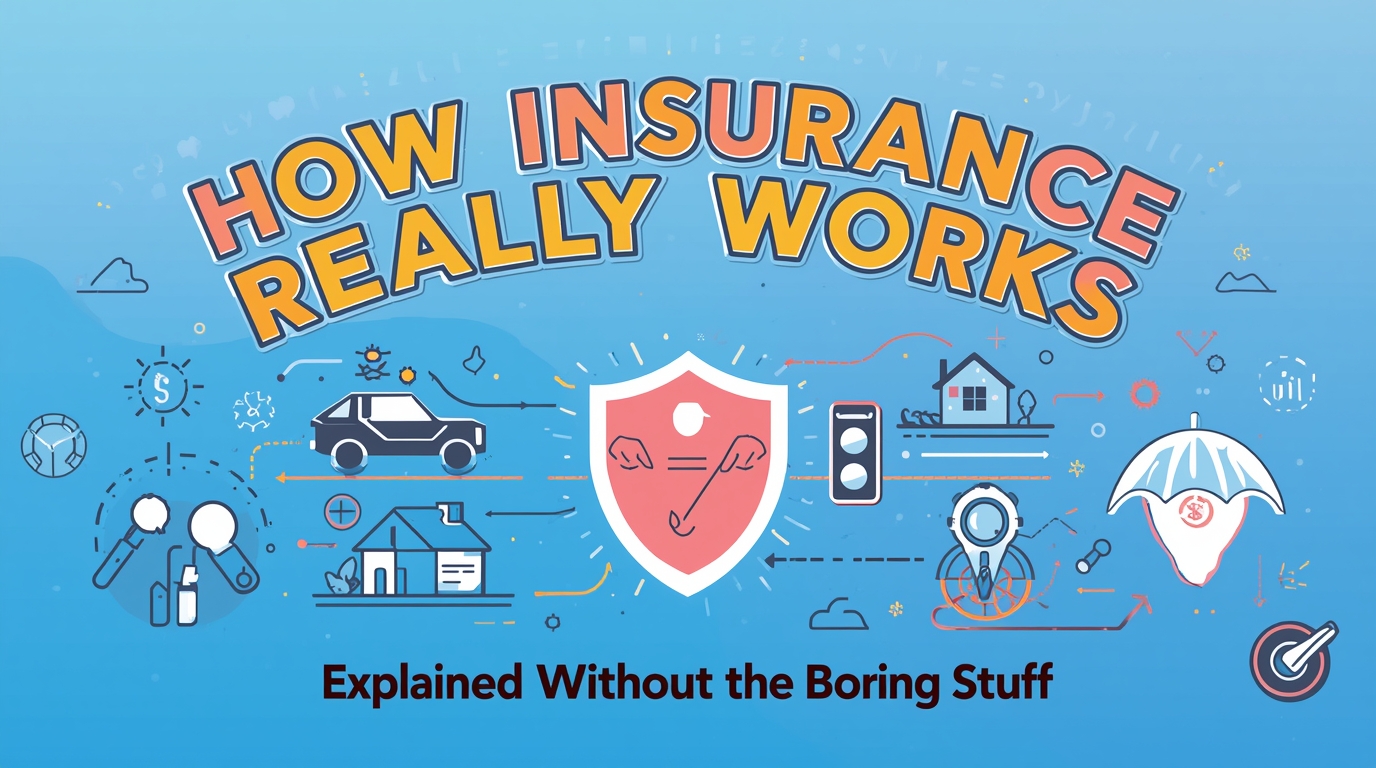
Let’s be honest. When you hear the word “insurance,” your brain probably does one of two things: it either falls asleep instantly or starts screaming, “I have no idea what this is!” But fear not, because we’re about to break down insurance in a way that actually makes sense—without drowning in jargon, fine print, or the dreaded legal mumbo-jumbo.
By the end of this article, you’ll understand insurance like a pro—or at least like someone who could confidently nod at a dinner table conversation about it without looking like a deer in headlights. And yes, we’ll sprinkle in a little humor to keep it fun.
What Is Insurance, Really?
Insurance is basically a financial safety net. Think of it as paying a little now to avoid a giant headache later. Imagine you and a bunch of friends are all carrying buckets of water. One day, someone accidentally spills their water all over the floor. Instead of that person crying alone, everyone’s buckets come together to mop it up. That’s insurance in action—sharing risk.
In technical-ish terms: insurance is a contract where you pay a company (the insurer) a fee (called a premium) in exchange for protection against financial loss.
The Simple Formula
Here’s how it looks in plain English:
-
You pay money (premium) →
-
Insurance company promises to help if something bad happens (coverage) →
-
You suffer a loss →
-
Insurance pays some or all of the cost (claim)
Pretty simple, right? Now let’s break it down more.
Why Do People Even Buy Insurance?
Some people think insurance is just a boring bill that exists to ruin your bank account. But the reality is far more practical.
Here’s why people buy it:
-
Peace of Mind – Sleeping without worrying that your car might explode is priceless.
-
Financial Protection – Accidents happen. Insurance keeps your bank account from going “oops.”
-
Legal Requirements – Some insurance is mandatory, like car insurance in most countries. Driving without it is like playing dodgeball with traffic tickets—painful and expensive.
-
Risk Management – Some losses are just too big to handle alone, like a house fire or medical emergency.
Think of insurance as a superhero. It may not wear a cape, but it swoops in to save your wallet when chaos strikes.
Types of Insurance (The Big Players)
Insurance isn’t just one thing. It’s a whole buffet. Here’s a breakdown of the most common types you’ll hear about:
| Type | What It Covers | Funny Way to Think About It |
|---|---|---|
| Health Insurance | Medical bills, hospital stays, prescriptions | Like having a doctor on speed dial for your wallet |
| Auto Insurance | Car accidents, theft, damages | The “oops, I hit a pole” fund |
| Homeowners Insurance | Fires, theft, natural disasters | Protects your castle from dragons (or leaks) |
| Life Insurance | Financial support for family after you die | “Keep my family fed when I’m gone” plan |
| Travel Insurance | Flight delays, lost luggage, medical emergencies abroad | Your travel buddy who cries with you over lost luggage |
| Pet Insurance | Vet bills for your furry friends | For when Mr. Fluffy eats something he definitely shouldn’t |
Key Point:
You don’t have to buy every type of insurance, but having the right ones can save your life—or at least your savings account.
How Premiums Are Calculated (Without the Math Headache)
Premiums are the money you pay for your insurance. But how do companies decide how much you should pay?
Here’s the secret formula (in human terms):
-
Risk Assessment – The insurer guesses how likely you are to need help. High risk = higher premium.
-
Coverage Level – More protection = more money. Want full car replacement? That’ll cost extra.
-
Deductibles – This is the amount you pay before insurance kicks in. Higher deductible = lower premium, and vice versa.
-
Other Factors – Age, location, health, driving record, or even if your pet has a history of eating shoes.
Example:
Imagine two drivers:
-
Driver A is 22, drives a sports car, and loves drifting.
-
Driver B is 45, drives a minivan, and has never caused a fender bender.
Guess who pays more for car insurance? Yep, Driver A. Sorry, thrill-seekers.
Deductibles, Coverage Limits, and the Fine Print
Now we’re entering the part most people skip because it sounds boring—but don’t worry, I’ll make it digestible.
-
Deductible – This is your “I’ll take the first hit” amount. If your deductible is $500, that’s what you pay before insurance helps.
-
Coverage Limit – The maximum the insurance will pay. If your house burns down and your coverage is $200,000, that’s your limit. Anything above is on you.
-
Exclusions – Things the insurance won’t cover. Every policy has them. If you try to claim “alien abduction insurance,” they might politely decline.
Quick Tip: Always check the deductible and coverage limit before buying. It’s like checking if the parachute opens before jumping out of a plane.
How Claims Work (Or, How to Get Your Money Without Losing Your Mind)
Filing a claim is like asking your insurance company, “Hey, remember that promise you made?” Here’s the usual process:
-
Notify the Insurer – Call or file online as soon as possible.
-
Provide Details – Give them proof, photos, or receipts.
-
Investigation – They check what happened and how much it costs.
-
Payout – If everything’s approved, you get money to fix the problem.
Funny Example:
Imagine your dog chews your couch. You call your insurance: “Hi, my dog turned my couch into Swiss cheese.” If you have pet insurance with furniture coverage, they might help. If not… well, you now own a modern art couch.
Why Insurance Isn’t Free Money
Some people think insurance is like a magical ATM. Spoiler: it’s not.
Insurance is protection, not a way to make money. Paying premiums doesn’t mean you’ll always get a payout—it means you’re covered if something goes wrong.
Think of it like buying an umbrella. You pay for it, but it only “pays off” when it rains.
Insurance Companies: How They Make Money
Insurance companies don’t just sit around waiting for disasters. They’re actually skilled money jugglers:
-
Collecting Premiums – Most people don’t have disasters every year, so the company has extra cash.
-
Investing – They invest collected money in stocks, bonds, or other assets to earn more.
-
Paying Claims – Only when disasters strike do they pay out.
It’s basically a giant group savings and investment plan. Except you get protection too.
The Weird Stuff in Insurance (That Makes You Go “Huh?”)
Some insurance stuff is honestly bizarre, but it exists.
-
Alien Abduction Insurance – Yep, some companies sell it.
-
Body Part Insurance – Singers and athletes sometimes insure their voices, legs, or hands.
-
Kidnap & Ransom Insurance – Used by executives in dangerous regions.
-
Wedding Insurance – In case your big day goes sideways.
Insurance isn’t just about accidents; it’s about predicting anything that could cost a lot of money.
Tips to Get the Best Insurance Without Crying Over Bills
-
Shop Around – Prices can vary like crazy.
-
Bundle Policies – Car + home = discounts in many cases.
-
Check Deductibles – Higher deductible can save money if you’re careful.
-
Read the Fine Print – No, seriously. Read it.
-
Ask Questions – If it sounds confusing, it probably is—so ask.
Common Insurance Myths (Busted)
| Myth | Reality |
|---|---|
| “Insurance is a scam.” | Nope, it’s legal protection and financial planning. |
| “I’ll never need it.” | Accidents happen. Statistics are against you. |
| “I get money back if I don’t use it.” | Only some policies offer “no-claims bonuses,” most don’t. |
| “It covers everything.” | Nope, read the exclusions. Alien attacks are rarely included. |
| “Young people don’t need insurance.” | Risk is high for teens and young adults, especially cars and health. |
Conclusion: Insurance in Human Terms
Insurance might sound boring or complicated, but it’s really just:
Paying a little now to avoid paying a LOT later.
It’s protection for your health, car, home, family, and sometimes even your pets. Understanding premiums, deductibles, coverage limits, and claims will make you smarter, more prepared, and possibly less likely to scream at your computer when an accident happens.